UrbanStat Classified 80% of Structures Burned in Dixie Fire as High or Worse Risk
Dixie Fire, 2nd largest wildfire in the history of wildfires in California, has burned almost 1 million acres during the summer. According to CalFire, about 3,600 structures were affected by this fire. About 1,300 properties were completely destroyed.
UrbanStat uses artificial intelligence that is powered by over 30 different variables to predict the long term risk of wildfires in California and 4 other states in the west coast. Every year, we publish our seasonal results with the public.
For certain wildfires, we release interim results as the fires progress. About 2 weeks after Dixie started we published our initial results. As the fire is now mostly contained, we decided to analyze our model's performance against the actual damages.
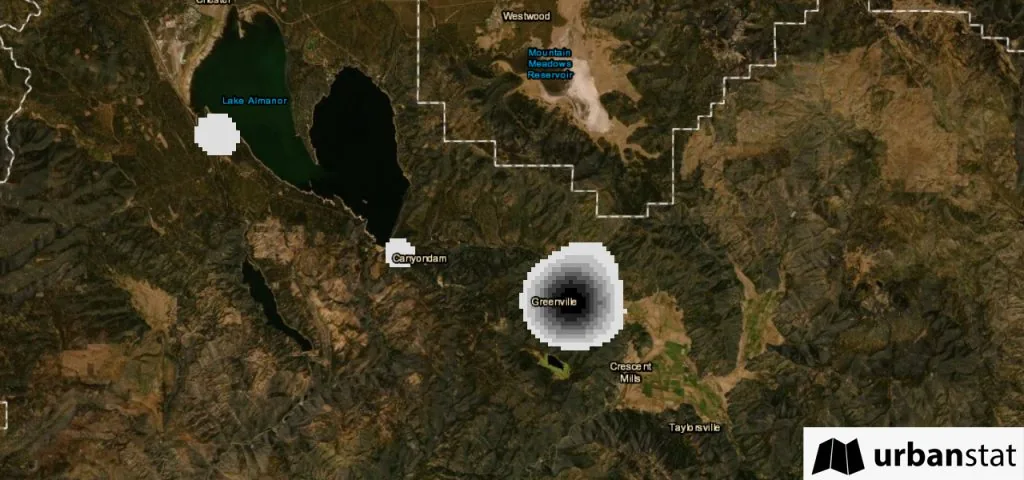
Majority of the structures heavily affected by this fire were in the town of Greenville, a Northern California community. The map below shows the density of structures that were affected by the fire.
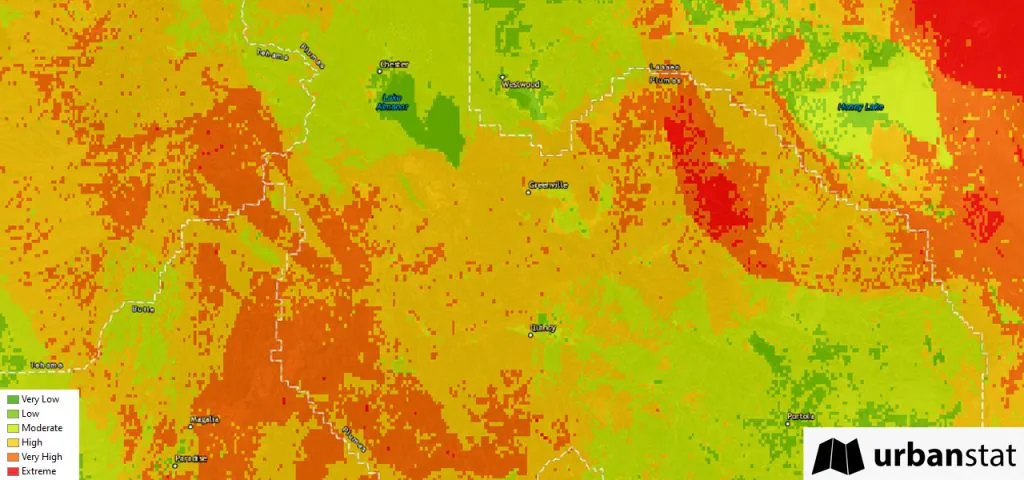
According to UrbanStat Wildfire Risk Map about 35% of California has High or worse (Very High, Extreme) risk when it comes to wildfires. The area where Greenville is located is mostly classified as High risk.
Before the fire departments took control of the fire in Greenville, Dixie fire had wiped out most of the town affecting about 1,400 structures.
UrbanStat updates its wildfire risk map every year after the fire season ends between January and April to teach the algorithm the newest trends based on the real data gathered from last year. The model we have used to evaluate our performance was completed in 2020 Q1 and since then the model has not seen any new data.
Based on this model, UrbanStat Wildfire Risk Map has classified about 80% of these structures in Greenville as High or worse (Very High or Extreme) risk.
We believe that the future of wildfire risk assessment lies in the intersection of artificial intelligence and geospatial analytics.
Your competitors are already using these insights to write better risks.
Don't fall behind.
Request a Demo →